Development Centre – Scaler Corporation – Case Study
Instructions
In the following pages, you will be given detailed information about your role in a situation. You need to understand this information and develop your thoughts about the key focus areas. There are questions that you will be provided during the Development Center that you will need to answer based on this case. Keep the objectives of your role in mind before answering the questions.
Please ensure that your answers are jotted down neatly since these will be assessed by an assessor.
Note: Please approach the facts in this case just as they are provided to you in the brief.
Case Study Context
Scaler is a life science equipment manufacturing company that manufactures laboratory equipment, scientific instruments and optical devices that are used by scientists, engineers, researchers and government agencies in the life sciences space. It also provides related services in the areas of maintenance, training and laboratory resource management. Scaler was incorporated at Santa Clara, California in 1940, essentially to support the war effort by providing the research department of the government with advanced lab equipments.
Currently, Scaler manufactures high technology products like oscilloscopes, mass spectrometers, chromatographs, spectrum analyzers, etc. and provides services in repair and calibration, training and application engineering, laboratory resource management, etc.
Global Operations of Scaler
Today, Scaler has established offices in more than 36 countries. A major proportion of its workforce (of around 19,000 employees) works out of Asian nations. It clocked net revenue of USD 5 billion in 2012, out of which a significant proportion (28%) was contributed by Asia. Europe contributed 22% and the Americas contributed 30% and the Americas contributed 30%. The geographic entities are, more or less, decentralized and manage their own operations.
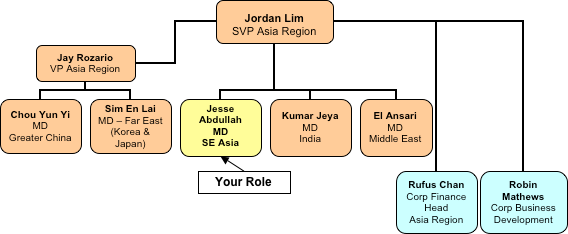
Global operations are structured geographically into 4 regions. The regional offices are situated in Hong Kong (Asia), Munich (Europe) and Auckland (Australia) while the corporate office takes care of Northern, Central and Latin America. Jordan Lim heads the Asia operations with teams operating in Far East (Korea & Japan), Greater China, India, Middle East and South East Asia(SEA).
The SEA story of Scaler started when Scaler SEA was set up in 2003, with the corporate office and manufacturing plant in Malaysia – and since then, the company has been posting encouraging returns. The last 3 years’ contribution to the Asian revenue has shown progressive increase. SEA is thus seen as a growing economy and the company has big plans to expand its operations. (all details on the financial performance of Scaler in the past 3 years have been provided further ahead)
Operations of Scaler
Scaler operates two distinct business lines – wherever it is present.
- Manufacture and distribution of products that fall under the following broad categories:
- Test Equipment: These help in identifying the presence or absence of particular chemicals in the sample
- Measurement Equipment: These identify the presence and then measure the quantity of the chemicals in the sample
- Analysis Equipment: These are used to perform analysis on chemical samples
- Communication Equipment: These are specially needed to power and operate the test / measurement / analysis equipments
- Services of the following nature:
- Laboratory resource management (LRM) using customized software
- Maintenance Contracts: These contracts also include optional clauses related to upgrading / exchanging old models for new.
- Repair Service: This includes repair and calibrations of related products.
- Training Service: This includes training and application engineering services.
Operations of Scaler
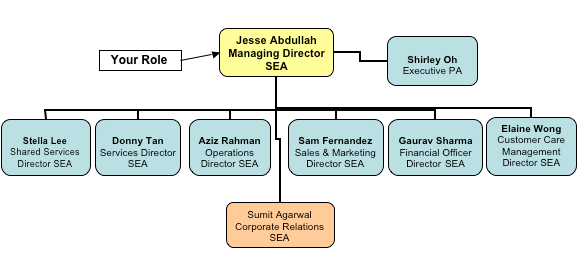
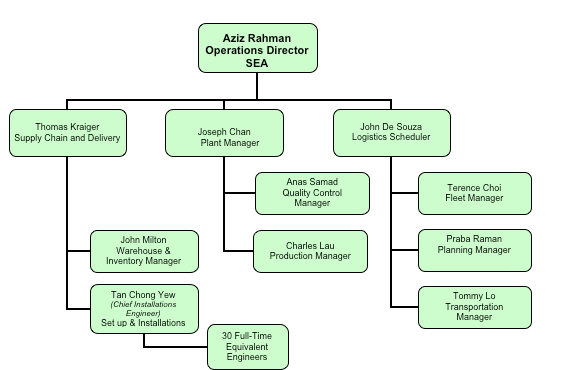
Below is the organization structure for Scaler.
Scaler Co. Asia
Scaler SEA
Scaler SEA – Operations Division
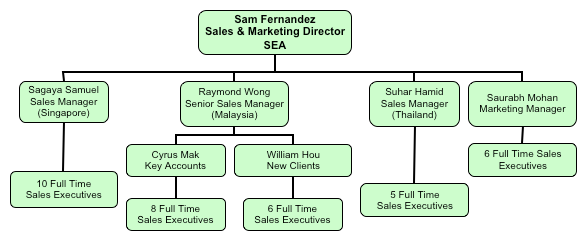
Scaler SEA – Sales & Marketing Division
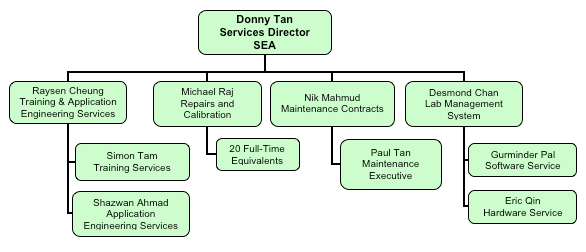
Scaler SEA – Services Division
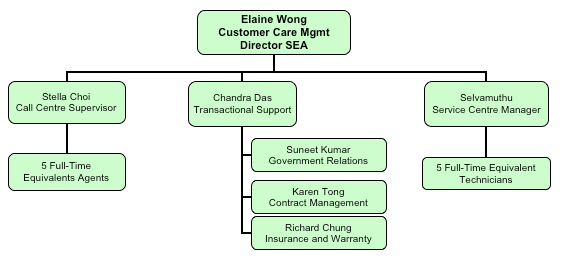
Scaler SEA – Customer Care Management Division
Operations of Scaler
Given below is relevant financial information about Scaler.
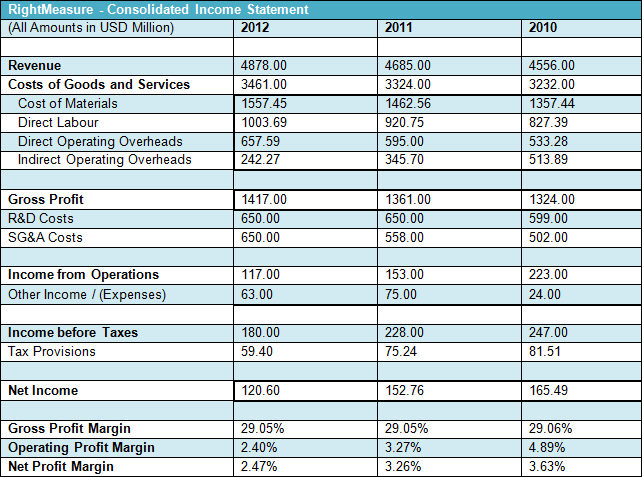
Scaler Consolidated income statement.
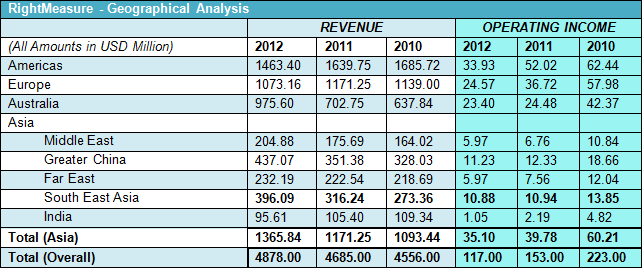
 Scaler Geographical Analysis
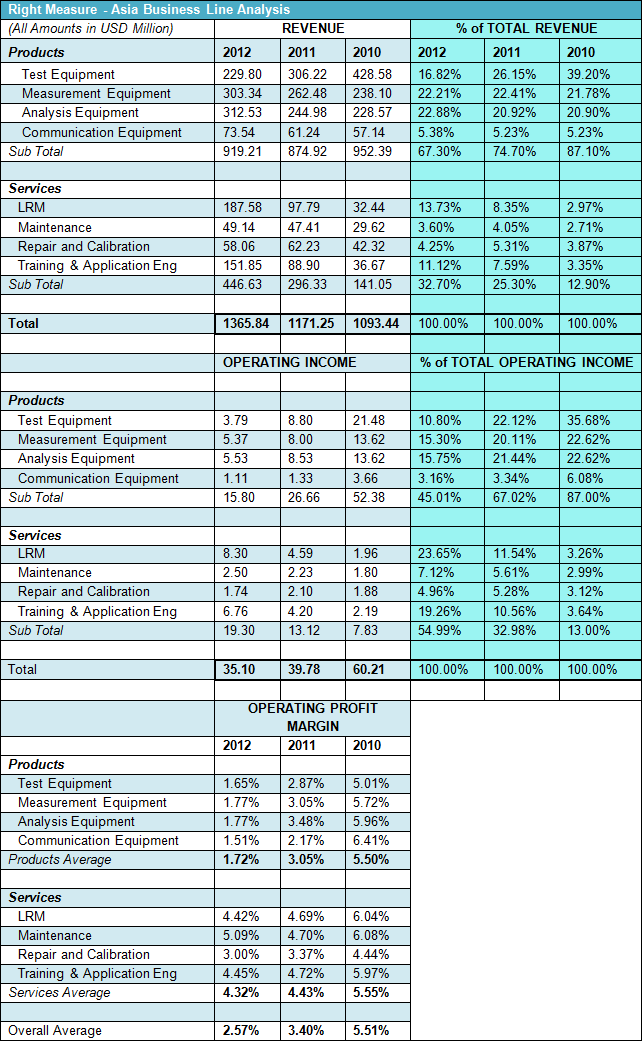
Scaler- Asia Business Line Analysis
Scaler- SEA Consolidated Income Statement
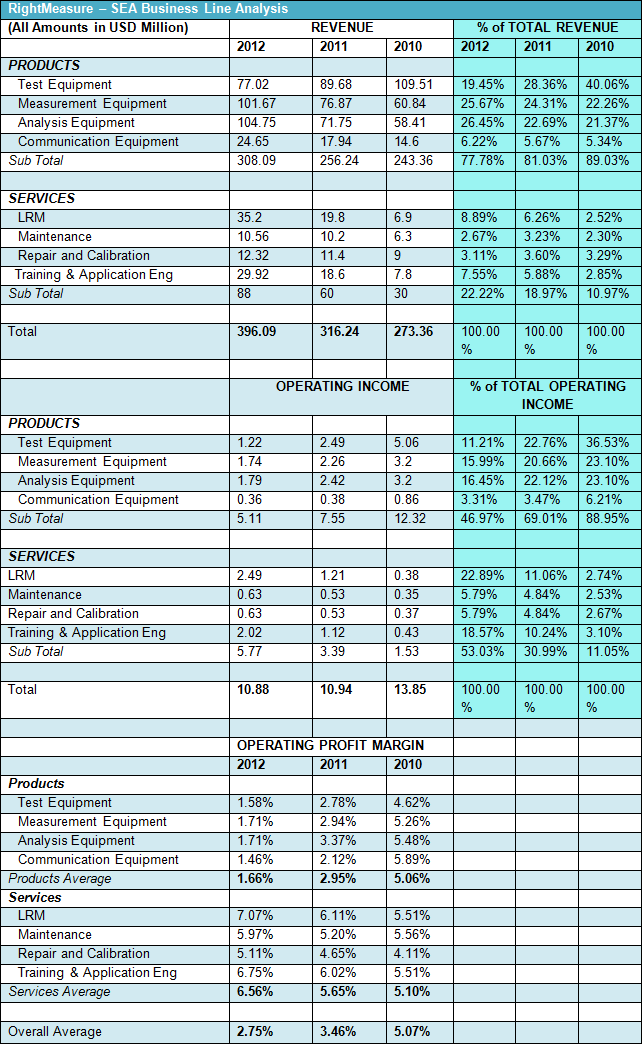
Scaler- SEA Geographical Analysis

Scaler- SEA Consolidated Balance Sheet
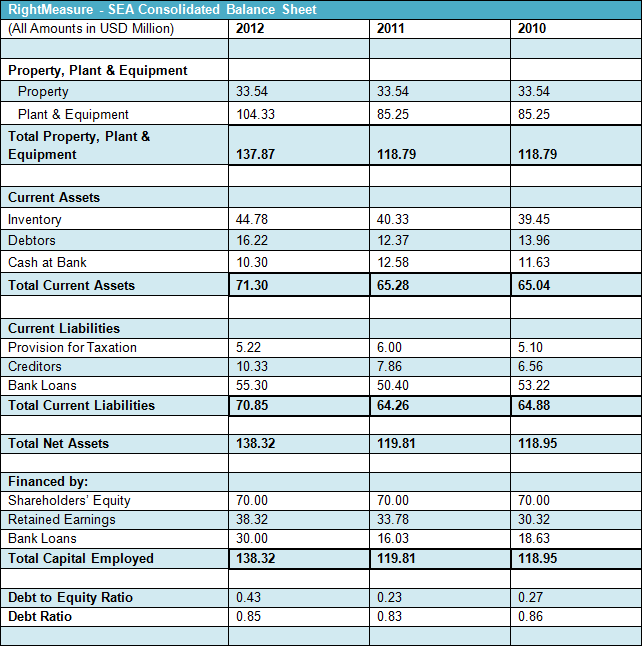
Scaler- SEA Business Line Analysis
 Scaler Mission, Vision, and Values
All Scaler Co. employees are guided by three directives: our Mission, our Vision, and our Values.
Mission
Provide the very best support and advise coverage on measurements to all our clients in the life sciences industry.
Vision
To be the world’s premier and most sought after Measurement Company in life sciences.
Values
VALUE CREATION… We are dedicated: to create value for our shareholders by providing company growth and strong financial performance. To create value for customers by providing accurate and creative products and services. To create value for our employees by providing a work environment that encourages employee development and success and that recognizes achievement.
ACHIEVEMENT… We value the active pursuit of excellence, demonstrated by continuous improvement in standards, quality and speed. Our collective ability to get results and accomplish our goals adds critical value to the Company. We are committed to winning in today’s competitive market place.
ACCOUNTABILITY & RESPONSIBILITY… We insist that everyone takes personal responsibility in all relationships. This guides our decision making that impacts investors, consumers and other stakeholders. We believe that consistent achievement of Scaler’s goals requires individual and team accountability at all levels of the Company.
TRUST & INTEGRITY… We strive to achieve a high degree of trust with all our partners in all of our business endeavors. This represents quality in our products and services, adherence to the expectations of our vendors & suppliers and compliance to the local laws of the land. We insist on applying the highest ethical standards and adherence to Company values. All employees have the responsibility to conduct their business relationships, both internal and external, with the highest level of professionalism and integrity.
DEDICATION & COMMITMENT… We are dedicated to consistently maintaining a high level of customer satisfaction. We are committed to achieving the goals we have set for ourselves – both as a company and as individuals.
DIVERSITY… We realize that the differing perspectives of people from different backgrounds create an enriching environment where we can learn from each other.
To: Jesse Abdullah, Managing Director SEA
Date: July 6, 2013
From: Shirley Oh, Executive PA
Subject: CEO’s Message for 2013
Dear Sir,
At the request of Mr. Jordan Lim, I’m forwarding the following email for your information.
Regards,
Shirley
Forwarded
DATE : 12th January, 2013
TO : All Country Heads
FROM : Peter Wilson – CEO
SUBJECT : Address for 2013
As we are about to start a new financial year I feel that is appropriate to comment on achievements in 2012 and re-focus our attention on the key objectives that were outlined in our strategic goals for 2013.
2012
At the consolidated group level, we posted a growth of 2.47% in Net Profit Margin in the past year, compared to 3.26% the previous year. Geographically, both revenue and operating income in mature economies (Americas and Europe) have been falling. Competition has ensured that our margins are always under pressure in these markets. Asia and Australia have both recorded consistent increases in revenue; however, with an unfavorable cost structure, these markets are not immune to threats on the profit margin.
2012 has thrown up opportunities that we need to capitalize on quickly. Our service offerings are increasingly generating more revenue and return compared to our product offerings. This being an industry-wide phenomenon, we need to ensure that we stay one step ahead of our competition. We therefore need to listen carefully to what the market is saying, build the needed capabilities and exploit this opportunity.
Objectives for 2013
In broad terms, our key objectives for this year are as follows:
- To stabilize our position as the “Top 5” player in the Global life sciences equipments market. In our base market of Americas, we need to stop our slide (from 2 to 4) that we have seen in the past 3 years. We continue to hold on to the number one spot in Asia (in revenue terms) by a wafer thin margin. Competition is catching up with us and we cannot afford to relax.
- To leverage technology. Technology has helped some of our competitors to grow very fast. We have been slack in focusing on this aspect and it has been hurting us – especially in our service offerings. This has to be rectified as soon as possible.
- To build broader and deeper relationships with our clients. We need to start working more collaboratively across the organization to cross-sell our products and services to clients. This will help us build better solutions for our clients that will deliver more value and create repeat business.
- To develop our expertise and people. To win the best clients, deliver the best work and attract the best talent, we need to continue to develop our expertise and people. The industry is going through tremendous change, we need to keep pace with it and equip our people with the skills not only to match it but also exceed it. We need to look for ways in which we can leverage on our current infrastructure in achieving this.
We have a great team and some of the best people in the industry. I know if we focus on our core objectives and work together to tackle the challenges ahead, we will make 2013 a very successful year.
Regards,
Peter
Competitive Landscape
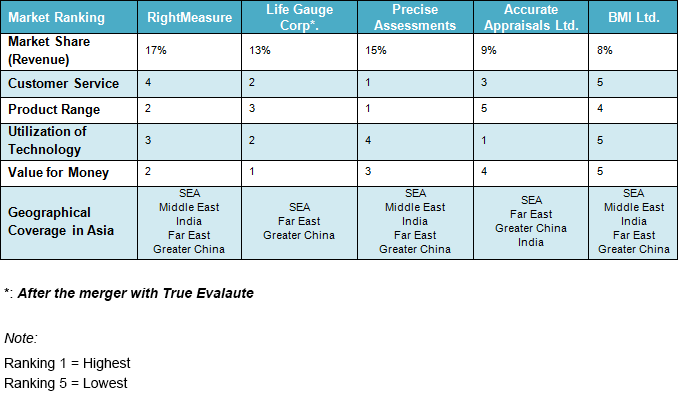
There are five major players including Scaler that are active in the SEA market (in addition to many small players). Between them, these “Big 5” take a large piece of the revenue pie (62%) and dominate the high-value, technologically complex end of the market. In Malaysia, Singapore and Thailand, the market is rather saturated by these big players.
A brief outline is provided on the main competitors as follows:
Life Gauge Corp.
- A privately held company based out of Denmark, Life Gauge Corp specializes in one particular product line – Test Equipment. They are market leaders in this segment, and by leveraging this, they have built a very strong brand presence throughout the world that has helped them to manufacture and sell other product lines.
- They made their entry into Asia in a small way, banking on their traditional strength in Test Equipment. However, they have moved quickly in consolidating their standing in other products.
- Recently, they took over a regional company (True Evaluate) that had a strong customer base in Asia. This was part of their long term strategy to have a large % of growth coming from Asia and Latin America. The acquisition of True Evaluate has catapulted them into the “Big 5” in SEA. They continue to have aggressive organic and inorganic growth plans for Asia
Precise Assessments Group
- This is the largest manufacturer of life science test and measurement equipment in the world. Traditionally, they have focused exclusively on equipment manufacturing.
- The Precise Assessments Group is working hard to rectify this. Their latest Annual Report (2012) released from their corporate office in Louisville reads “….we are committed to investments in building service capabilities to complement our product line…this is the way we believe we can provide more value to our shareholders and our customers…….”
Accurate Appraisals Limited
- In spite of being the new kid on the block, Accurate Appraisals surprised analysts and investors alike by their quick rush to the top.
- Headquartered in Shanghai, the secret of their success lies in tapping into the software enabled Laboratory Management System. They entered into a strategic tie up with Macro Soft Inc (the technology major) and have developed an application software that can be used in a variety of situations.
- Accurate Appraisals sees a high potential for training & application engineering services and if industry insiders are to be believed, they are set to announce their entry in this field in a big way.
Bio-Medical Instruments (BMI) Ltd.
- BMI is a regional player that is dominant in its home market of Singapore, but they also have global ambitions. They have a significant presence in both the products and services segments.
- Keen market watchers say that very shortly this closely held company will go public to finance its growth plans – both in Singapore and abroad.
Industry Info
To: Jesse Abdullah, Managing Director SEA
Date: July 6, 2013
From: Shirley Oh, Executive PA
Subject: Customer and Market Research Data
Dear Sir,
Mr. Patrick Low had recently commissioned a Malaysian Research Firm “Feedforward Consulting” to conduct a survey on the life sciences measurement industry and the Top 5 players in SEA.
As requested, I am forwarding the key findings of the report.
(Please find the forwarded report in the next page.)
Hope you find this useful.
Regards,
Shirley
Industry Forecast
The survey predicts a robust growth in revenue of around 10% per year in the short term (next 5 years). This is largely driven by the fact that more and more pharma companies and biotechnology firms would be setting up or significantly ramping up operations in Asia (and especially in SEA) to take advantage of relatively low costs and favorable tax breaks.
An R&D funding squeeze in the UK has forced firms and institutes to look for low-cost alternatives that, coupled with capabilities in drug research and manufacturing, have doubled SEA’s attractiveness. The UK government has also announced incentives for the life sciences industry to encourage trade ties with emerging markets. At least a dozen small and medium sized life sciences companies and academic & research institutions from the UK are exploring collaborative opportunities in destinations like India and China, as well as other countries in SEA.
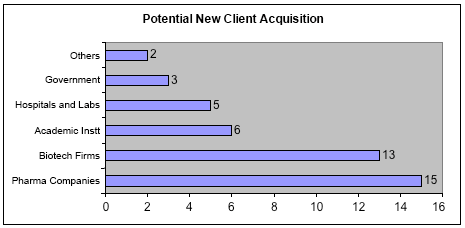
In countries such as Singapore, Malaysia, Indonesia, Mandawi and Philippines, players in the life sciences industry are expected to introduce technologies to address demand from government-funded research institutions, pharmaceutical companies and biotech firms. A government-supported infrastructure is expected to stimulate research in areas such as genomics, stem cells, molecular medicine, metabolic engineering and cell biology. Governments in these countries have added a few more path-breaking initiatives to encourage public-private partnership and fund advanced technology research and to build up human resources. The scheme will encourage entrepreneurship and meet some of the demands for early stage funding to handle risky parts of biotech product developments.
These companies would need more of the products surrounding analysis and communication rather than just detection and measurement equipment which have become more of commodities. While installing and running large scale R&D Labs and Manufacturing facilities in SEA, these companies will require help in managing of their facilities and training their personnel.
Customer Satisfaction Survey Results – Products and Support
Updated January 1st 2013
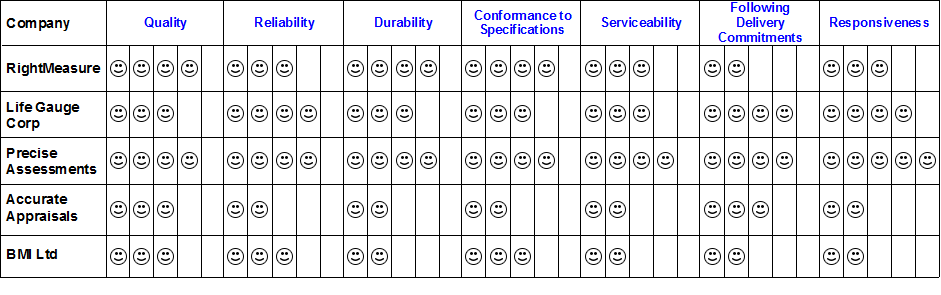
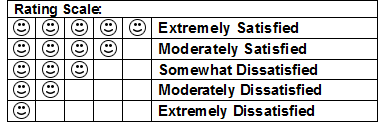
Top Five Life Science Measurement Equipment Manufacturers in Asia, 2012
 To: Jesse Abdullah, Managing Director SEA
Date: July 5, 2013
From: Sam Fernandez, Sales and Marketing SEA
Subject: Lab Resource Management – some extracts from publications
Dear Sir,
Here is some information that I’ve extracted from reports and research published early this year. It’s something to think about although I know Scaler is not well placed with respect to capabilities in this area.
Let me know what you think.
Extract from the article – “Laboratory Resource Management” (Society for Medical Instrumentation Journal)
The sheer size and complexity of modern research labs have ensured that the traditional ways of managing them are not up to the task. Just as it happened about a generation back with Hospitals As was the case a generation ago with hospitals (with the Hospital Management System), it is only a matter of time before the help of IT is enlisted to manage these labs.
Extract from research paper done by IDC (industry research firm)
- IDC has predicted that Asia-Pacific will be one of the fastest growing markets for Laboratory Resource Management Systems in the next 5 years.
- IDC predicts the market worldwide for LRM will grow from US$7 billion in 2012 to around US$66 billion by 2023, representing a compounded annual growth rate of 25%. In Asia-Pacific, the rate will be around 29%.
Regards,
Sam
Dossier on Mandawi
Background
Geographically situated close to the equator, Mandawi has traditionally had to combat a range of communicable diseases, including malaria and dengue fever. This has resulted in a strong presence of local pharmaceutical companies and the availability of medical facilities and medical colleges. Historically, most pharmaceutical research labs are owned by the government – so are many medical colleges and hospitals. In recent years, the Mandawian government has put in place policies to liberalize the medical care sector. Hence, a ready market exists for the life sciences instrumentation companies. However, the collapse of the Mandawian economy in the mid-1990s and the subsequent political turmoil set the country back in its nation building focus, slowing the development of its national health system. The Life Sciences sector and its corresponding equipment manufacturing industry was not a priority agenda.
In recent years, the Mandawian government has renewed its interest to improve the health of its population and is much more open to foreign direct investments (FDIs) in the Life Sciences Equipment Industry.
A large proportion of the high end life sciences equipment product market in Mandawi belongs to popular foreign companies. The equipments themselves are imported and are consequently expensive. In the Test Equipment group, companies like Precise Assessments are very active. Bio Medical Instruments (BMI) Ltd is a major player in the Analysis & Communication Equipments group.
Additional snippets of information
- In a survey among CEOs of global Pharma and bio technology firms, Asia remains an area of growth. They ranked Mandawi, Thailand, Indonesia and Vietnam as the top four focus markets in Asia in the next few years.
- As part of its welfare agenda, the Government is committed to opening 5 super specialty hospitals in 5 cities and more than 10 specialty hospitals. The government has earmarked around USD 100 million for these super specialty hospitals.
- The life science equipment industry is estimated to be worth around USD 70 million in Mandawi currently and is expected to grow at around 30% annually.
- Since the most sophisticated equipments were imported and distributed, no service based solutions have developed in Mandawi. Any repair/maintenance work requires the instruments to be sent back to the parent country. Hence there is a huge scope for training as well as Laboratory Management System.
Dossier on Mandawi
Scaler’s Current Position & Thinking
As of now, the only presence that Scaler has in Mandawi is through a tie up with a local firm. Authentic Biomedical Devices (ABD) is in the same business (life science equipment manufacturing) with one major difference – ABD product lines are not highly sophisticated and they manufacture only test & measurement equipment. To expand their market, ABD entered into an exclusive agreement with Scaler to import and distribute its high end precision equipments (Analysis & Communication). This way, both Scaler and ABD benefit – ABD completes its product suite and Scaler establishes a foothold in the volatile Mandawian market with negligible risk. This equipment has been supplied traditionally by India, although the contract is with Scaler Asia.
In the event that Scaler SEA chooses to expand to Mandawi, Scaler Asia will raise issues of whether a manufacturing setup in Mandawi is better strategically or is partnership a better route. The long term objective is obviously to be a lead player in all the Asian markets.
On the political front, the opposition parties are against the liberalization & privatization policy of the ruling combine and there is the unstated fear that if and when the opposition captures power, it may reverse some economic policy decisions taken by the previous government. The next election is in 2016.
Finally on the question of finance, management needs to look into whether there are sufficient reserves & surplus to sustain either a partnership based foray or a manufacturing setup. The stock market is currently at its peak. Scaler has a BBB rating.
The Management feels that to service the Mandawian market effectively, an investment of approx. USD 10 million would be required in setting up the manufacturing plants over the next 2 years. The bulk of the investment would be in machinery and people costs. The potential revenue stream from this is approx. USD 3 million in the first 2 – 3 years with a possibility of a growth rate of about 15% to 20% beyond that.
A tie up with a Joint Venture partner would involve much less upfront investment but the revenue potential would depend to a very large extent on the kind of deal that is struck with the partner. Estimates suggest that JV revenues of USD 5 million may be possible over the first 2 – 3 years.
Dossier on Mandawi
Potential manufacturing setup opportunities
There are 3 locations that could be evaluated as potential manufacturing setup options.
The first opportunity is Mandawi Central. Boasting almost one third of the country’s population, this is the center of Mandawi’s economic and industrial activities. The state government is represented by the ruling party with fairly aggressive focus on economic and social development. Generally, the standard of living here is high. There is increased health awareness as the federal and state governments push for many initiatives and forums that address healthy living.
Mandawi Central is strategically located and hence, it has close proximity with major government medical institutions and research facilities. Private hospitals are also flourishing here. Physical infrastructure such as roads, rail lines, etc are efficient and well kept. There is an existence of fairly good distribution channels, with good linkages to the port and airport.
Labour costs are generally expensive. Mandawi Central boasts a combination of low, medium and high-skilled workers. Most expertise and specialists are attracted here. Land costs are also generally expensive. Both local and foreign investors may find themselves paying twice as much compared to other locations. Land is also getting scarce and congestion is evident. Protection of intellectual property is low to moderate. Generally, the federal and state governments are also careful with large outlays in capital investments.
In the past, the state government has been generally stable but in recent years, there have been a few major cases of corruption and breach of trust. Recent riots, although under control, are causing unrest in certain sections of the population.
The second opportunity is Mandawi South. It is situated in the southern rural areas in Mandawi and is one third the size of Mandawi Central. The state government is also represented by the ruling party which has been rather conservative and stable in the past. However, due to its near-defeat in the recent elections, the state government has increased its focus on the economic and social development of the southern region. The standard of living here is generally low. In the last few years, the state government has been laying stress on increaing the quality of healthcare products and services provided to its citizens.
Mandawi South has fairly close proximity with several government medical institutions and rural clinics. Currently, there are only a few private hospitals in this region. The South is moderately well connected to the port and airport. Roads, rail lines, etc are relatively old – the state government had expressed during its last elections that it has plans to improve the quality of the infrastructure and increase its linkages with other major towns and cities.
Labour costs are generally low. The South boasts a combination of low and medium-skilled workers. Expertise needs to be imported in certain highly specialized and high tech industries. Land costs are generally low. There have been relatively few manufacturing setups in the South but the Federal government is deliberating on moving some of its industrial activities here as the South is located close to other SEA countries which have trade ties with Mandawi. Protection of intellectual property is low to moderate. Generally, the federal and state governments are also careful with large outlays in capital investments.
The third opportunity is Mandawi North which is situated in the northern rural region in Mandawi. It is about half the size of Mandawi Central. Represented by a liberal opposition party, the state government has been generally stable in the past and is aggressively working towards the development of state. Historically economic growth has been steady with the state government increasingly focusing on social welfare schemes in the areas of education, health, curbing of crime rates, etc. The standard of living in the North is generally low.
Mandawi North has moderately close proximity with several government medical institutions and research facilities. Private hospitals are few but they are growing rapidly. The distribution channels and linkages to the port and airport are moderately good. Roads, rail lines, etc are relatively old – the state government has limited budget in infrastructure development but is aggressively pursuing ways of funding this.
Labour costs are generally low. The working population in North typically comprises of low to medium skilled workers. Expertise needs to be imported in certain highly specialized and high tech industries. Land costs are typically in the low to medium ranges. There has been an increasing concentration of manufacturing activities in the North due to increasing economic activities. Protection of intellectual property is low to moderate.
Generally, the state government is careful with large outlays in capital investments but is interested in increasing the quality of healthcare and research in this region. There has been a growing awareness of the importance of health among its people and part of the state government’s agenda is to ensure accessibility of health service to all.
Dossier on Mandawi
Potential JV Partners
There are three options that could be viable business tie-up opportunities for the company.
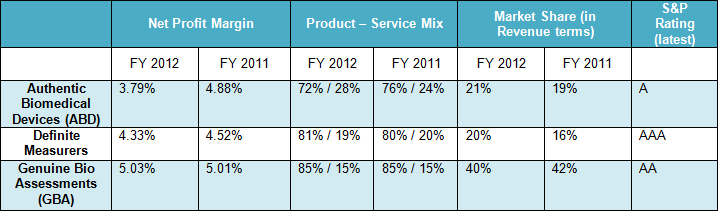
The first opportunity is Definite Measurers, Mandawi’s leading life sciences equipment manufacturer. Definite Measurers is reputed for its quality products and excellent customer service in the market. They started operations 6 years back and have captured good market share (approximately 20%) due to their right pricing strategy. The same business house also runs a chain of hospitals and medical colleges – which forms a captive clientele for Definite Measurers. Mr. Patrick Low (your predecessor at Scaler) had a chance encounter with Mr. De Silva, who heads Definite Measurers, when he attended an industry-wide forum in Hong Kong a few months ago. During this conference Mr. De Silva had mentioned to Mr. Low that Definite Measurers was scouting for partners who can provide them with technical know-how to enable Definite Measurers to be best in class product providers.
Mr. De Silva had in addition remarked that the conglomerate that owned Definite Measurers was very serious about the life sciences equipment market and looked at it as one of their growth areas and looked to stay invested in the long term. Financial analysts say Definite Measurers has strong fundamentals. The company has limited presence in the services line with products contributing approx. 80% to the top-line.
Recently, two other concerns of the same conglomerate that owns Definite Measurers have been in the news for all the wrong reasons. Some senior employees of these concerns were questioned by law enforcement officials for possession of confidential government policy documents. There have also been accusations of violation of tax regulations and non-payment of taxes that have been raised against these concerns. However, Definite Measurers per se has not had any such problems.
The second opportunity is with Genuine Bio Assessments (GBA) which has been a long time player in the Mandawian market. They were once the unchallenged leaders in the life science equipment field; however due to new entrants, the current market share now stands at 40%. GBA, which was family owned, went public two years ago. The second generation promoters of GBA had decided to go public to raise money to modernize the company and bring in the latest technology from outside. GBA had tied up with Precise Assessments for this. GBA is traditionally known for providing value for money products. GBA has marginal presence in the services business line with only repair & calibrations and maintenance.
GBA is financially healthy (by industry standards) with a Net Profit Margin (NPM) consistently in the range of 5%. Recently, the good image of GBA has been dented by a litigation involving GBA and a major pharmaceutical company. The company claimed that GBA supplied sub-standard equipment to them resulting in substantial loss for them and hence claimed unspecified damages. GBA has contested the charges and the case is still pending in court. Meanwhile, last week, the Economic Times of Mandawi had carried a snippet that global major Life Gauge Corp. was in talks with GBA.
The third opportunity is with Authentic Biomedical Devices (ABD). ABD has slowly and steadily built a loyal customer base for test and measurement equipments. Recently, through their strategic tie up with
Scaler, they have also succeeded in attracting & retaining customers who require analysis & communication equipment. More than a fourth of its revenue comes from services. The partnership has been more or less symbiotic and mutually rewarding.
ABD is a closely held family concern – but has a professional management. ABD has recently invested significant sums in its services business line – specifically IT enabled solutions – which has had an adverse short term impact on their cash position and P&L. The person in charge of ABD, Mr. Peter Wong is known to you since you had interacted with him briefly a few years ago.
ABD has been awarded the prestigious Blue Peacock award for corporate governance and possesses impeccable credentials from creditors. However, recently, there have been a series of incidents which have soured the relationship between ABD and Scaler and have strained relations both with Scaler Asia & Scaler SEA. ABD refused to adhere to payment terms for the supply of a batch of Analysis equipments on the grounds that the delivery was made late and due to this, ABD lost out on a major client order. On deeper analysis, it was found that Scaler was partly to blame for the delay – however the overwhelming point of view amongst Scaler Asia was that this wasn’t strong enough for ABD not to honor the payment terms. Legal opinion seconded this and recommended that the grounds under which Scaler was denied rightful payments will not stand scrutiny in a court of law. Scaler Asia is currently contemplating taking action on the legal advice.
To: Jesse Abdullah
Date: July 6, 2013
From: Shirley Oh
Subject: Mandawian Companies – financial snapshot
Dear Sir,
As requested, please find the details of the 3 Mandawian Life Science instrumentation companies below:
 Regards,
Shirley
Customer Segmentation
The customer segments of Scaler fall under the following categories. The contribution to the total revenue pie over the past two years is also shown in the bar chart below:
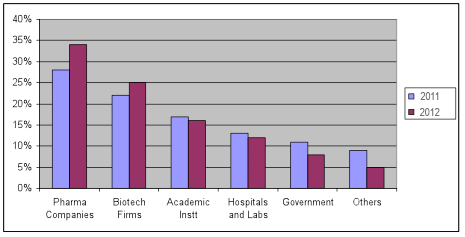
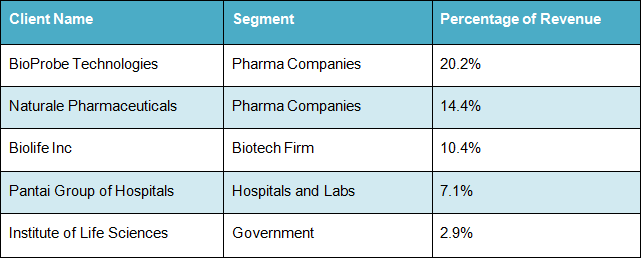
The top 5 clients of Scaler account for almost 55% of the revenues. The revenue share of the top 5 clients in the year 2012: